
Suno v6 vs v6 mini vs v6 wild: same settings, same price, three different engines
On LUVI, Suno v6, v6 mini and v6 wild take the same eleven settings and cost the same 264 credits for two takes. The only thing you choose is the engine: v6 for polish, v6 mini for fast drafts, v6 wild for less predictable ideas.
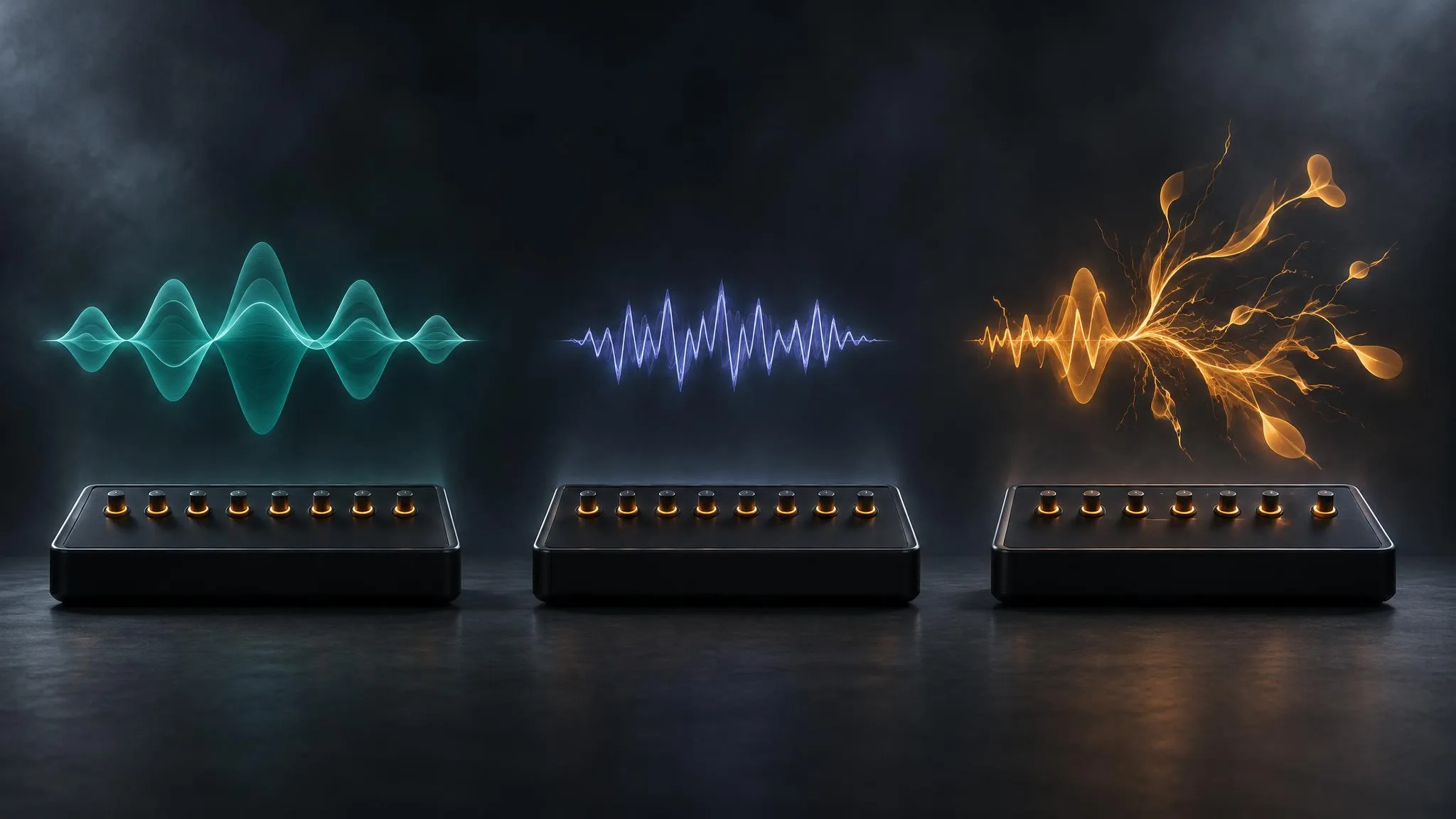
Suno shipped v6 as three models, and since October 17, 2026 all three run on LUVI: Suno v6, Suno v6 mini and Suno v6 wild. Each costs 264 credits per generation, and every generation returns two takes of the same request. On Suno's own site the three sit on different subscription tiers; on LUVI they don't differ in price or in settings at all, which makes the choice simpler than it looks.
What actually differs between the three?
Only the engine differs. The parameter contract is identical on all three, key for key, and so is the price: 264 credits whether you ask for a 15-second sting or a six-minute song, with vocals or without. What changes is how each engine treats the same request, and Suno describes that in its own words:
- v6 is the flagship: "reliable, precise and consistently delivers polished music across every genre and style. When you know what you want, v6 helps you get there."
- v6 wild "is built for exploration… it is less predictable and more varied, producing unexpected, textured and ambitious results."
- v6 mini "is a faster, more efficient version available to everyone."
On Suno's site, v6 and v6 wild are reserved for its paid subscribers and v6 mini is the free one. On LUVI that split doesn't exist: the three cost the same credits, so v6 mini saves you time, not credits.
Which settings do all three share?
All three take the same eleven settings, and the setting that matters most is custom, because it decides what your prompt is:
customoff (the default). The prompt is a description of the song, up to 3,000 characters. The engine writes its own lyrics.customon. The prompt is sung as lyrics. Only in this mode dotitle,style,negative_tags,duration,auto_lyrics,style_weightandweirdness_constrainttake effect. Set them withcustomoff and they are ignored, with no warning.- Always active:
instrumental(no vocals),vocal_gender(auto, male or female) andvariety.
variety is the setting that overlaps most with choosing an engine. It sets how far the two takes stray from the most predictable rendition, from off to max, and it works in both modes. Turning up variety on v6 and picking v6 wild are two different routes to a less expected result. The first keeps the flagship's polish; the second changes the engine.
What did LUVI's own run show?
LUVI ran one generation on each engine when the three were added on October 16, 2026, as a check that requests, files and charges line up, not as a listening test:
- v6 with a female vocal returned two tracks of 240 seconds each.
- v6 mini in custom mode with a 30-second
durationreturned two tracks of 29.89 and 29.93 seconds: the length target held. - v6 wild with
instrumentalon returned two 170-second tracks, and a transcription pass found no vocals in them.
Each run was charged 264 credits, the same as its quote. One run per engine says nothing about which one sounds better; it does show that the settings do what their labels say.
Which one should you pick?
Pick by how settled your idea is:
- You know the song. Use v6. Write the lyrics, set the style and the length in custom mode, and let the flagship deliver the version you described.
- You are drafting. Use v6 mini for quick passes, short clips and checking whether lyrics scan. Suno calls it faster; on LUVI it is not cheaper.
- You are looking for an angle. Use v6 wild for genre blends and arrangements you wouldn't have written, then bring the idea back to v6. Suno suggests the same loop: v6 wild "gives you new ideas to riff on, build from or bring back into v6 for further refinement."
Where did Suno's older versions go?
Suno's earlier versions, from v3 to v5, are no longer in LUVI's catalog. All eight left on September 22, 2026, and Suno has said it is moving its whole service to the new generation: "As v6 rolls out, we will retire our previous models and move Suno entirely onto the v6 generation." A prompt you saved for v5 still works as a starting point on any of the three v6 engines; only the settings follow the v6 list above.
How we checked
- Models: Suno v6, Suno v6 mini and Suno v6 wild on LUVI.
- What was read, and when: On October 20, 2026, each model's parameter contract through the LUVI connector, live credit quotes with default and custom settings, the catalog price on each model page, Suno's launch post and release notes, and LUVI's onboarding record with its test run of October 16, 2026 (one generation per engine).
- Results: identical contracts on all three; 264 credits on every quote, with any length or mode. No outputs were generated for this post, so it makes no claim about output quality.
- Drawbacks: We did not time the engines against each other, so "faster" for v6 mini is Suno's claim, not our measurement.
In LUVI
Open any of the three from the Suno Chirp family page and switch engines from the model picker; your prompt and settings mean the same thing on each. The two takes land in your library as separate audio files. New accounts start with 200 credits, and verifying a phone and a card adds up to 1,500 more, enough for several rounds on all three. Create a LUVI account to try them on the same prompt.
Sources
- Introducing v6 — Suno, official blog, Sep 9, 2026. Accessed Oct 20, 2026.
- Introducing v6 release notes — Suno, release notes. Accessed Oct 20, 2026.
More from Comparisons
- Higgsfield alternatives: what to compare before you switchThe closest Higgsfield alternatives are other multi-model platforms: Krea, Magnific (formerly Freepik AI), OpenArt, Pollo AI and LUVI Creator. All five list Veo 3.1 and Seedance 2.5. They differ on Kling 4.0, models tied to a plan, prices shown before a run and how they work with Claude or ChatGPT.
- Kling, Veo and Seedance on one subscription: which platforms carry all three, and which versionsHiggsfield, Krea, Magnific (formerly Freepik), OpenArt, Pollo AI and LUVI Creator all list Kling, Veo, Seedance and Nano Banana under one account. They differ in the exact versions (LUVI has no Kling 4.0), in whether a plan limits which models you can use, and in how each run is priced.
- Which text-to-speech model, and what each one charges byEight voice models on LUVI, and most are billed per character with no rounding up: the same 311-character paragraph came to 10 credits on one and 63 on another. One is billed by the minute instead, and its estimate is a two-minute hold.